Review the case, not the algorithm.
Doctors should see a clear case workspace: defect context, proposed patch, warnings, and a structured way to request changes.
Clinical viewCranial reconstruction software | clinician and investor pathways
A reviewable AI-assisted workflow for personalized cranial reconstruction. Step into the case workspace through an invite-only research demo, with six fixed-tail cases waiting to be inspected by clinicians and investors.
Research-use demo · invite-only
The demo is built around six fixed research-set tail cases. For each case you walk through the same sequence the workflow uses: input skull mask, defect understanding, boundary constraint, generated implant candidate, and the engineering-feedback outcome — all reviewable side by side.
No code? Request access
Platform positioning
CranioSwift speaks to clinicians and investors without making the homepage feel scattered. The common thread is a traceable cranial reconstruction workflow: case geometry in, patch candidate and quality evidence out, with every output reviewable by humans before it moves downstream.
Audience paths
Doctors should see a clear case workspace: defect context, proposed patch, warnings, and a structured way to request changes.
Clinical viewInvestors should see the market logic, current MVP progress, validation plan, and why this can become a surgical planning software layer.
Investor viewProduct experience
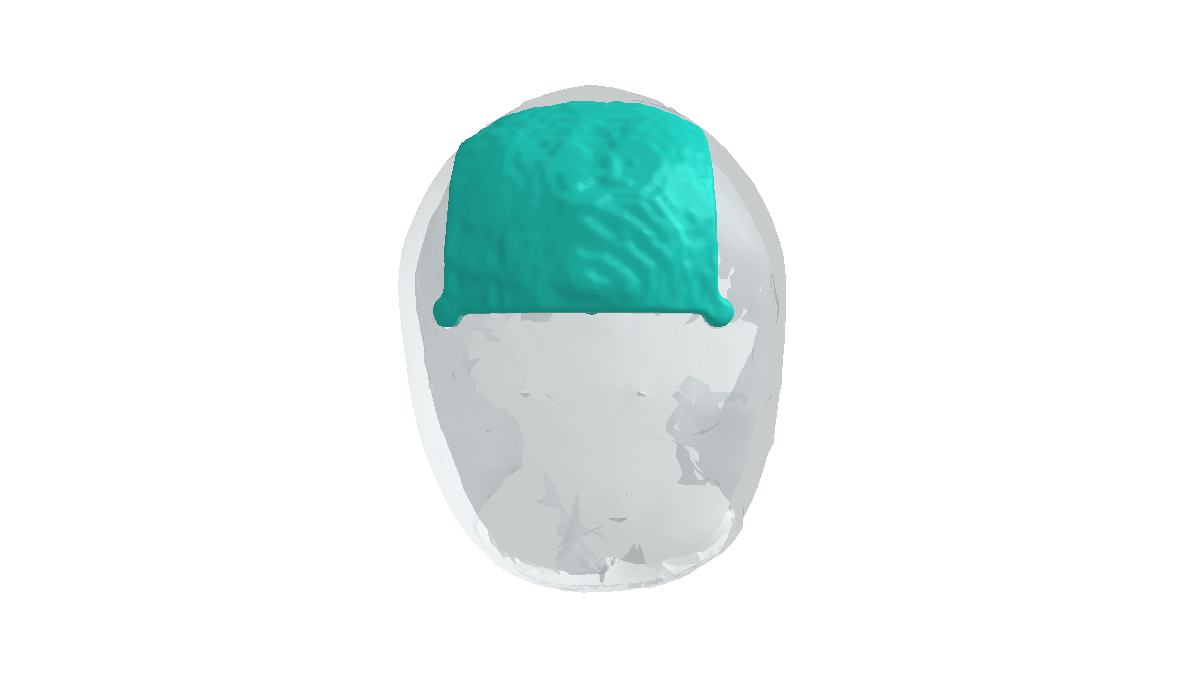
The first product surface turns model output into a reviewable case record: defect context, patch preview, quality metrics, warnings, export files, and route evidence.
Backend at a glance
CranioSwift's backend is split into four modules so each one can advance and be audited independently. Public materials describe the modules at the interface level only; method details remain internal during development.
Reads the patient's CT-derived skull mask and produces a defect mask, defect type, and a region of interest for downstream modules.
Builds a portable boundary-constraint artifact summarising the skull surface, defect rim, and a target-free coarse seed surface for the shape generator.
Generates the patient-specific implant mask and a smooth surface mesh from the boundary-constraint artifact, with reviewable preview outputs.
Runs structured engineering checks on candidate implants and returns a deficiency report so engineers and clinicians review concrete signals, not raw model output.
Clinical user experience
Review the CT-derived skull model, defect region, case metadata, and reconstruction route in one workspace.
Rotate the proposed patch, compare it with the defect boundary, and see where the model is uncertain.
Check mesh status, connected components, watertightness, warnings, and validation metrics before handoff.
Approve for technical review, request design changes, or send the case back with structured notes.
Investor view
CranioSwift currently has an initial detect-and-generate MVP. It exports patch meshes and quality reports from controlled cases while keeping technical limitations visible. For diligence, the key signal is that the company is already building toward a real workflow surface, not only a one-off model demonstration.
Defect detection, patch reconstruction, STL / PLY export, quality report, and provenance capture.
Public-case benchmarking, route selection, mesh quality reporting, and synthetic-case evaluation.
Improving the implant shape generator on the hardest research cases by training it to correct, rather than copy, the upstream coarse seed; and tightening engineering feedback into the review loop.
About Addin
CranioSwift is being developed as a product under Addin, the company vehicle intended to take this workflow from research software toward clinical, engineering, and manufacturing adoption.
Addin is planned as a spin-off company associated with the Monash Centre for Additive Manufacturing (MCAM), bringing together software development, additive manufacturing know-how, and medical workflow translation.
Manufacturing partners and 3D-printing collaborators remain part of the wider ecosystem and are reached through separate conversations.
Building the reconstruction pipeline, candidate generation, route selection, QA reports, and case workspace.
Connecting digital implant planning with manufacturability, material-aware review, and downstream production needs.
Designing the workflow so clinicians can inspect, question, and approve outputs before any technical handoff.
Shaping CranioSwift for pilots, strategic partnerships, regulatory planning, and future spin-off growth.
Next milestones
Stabilise the four-module backend on the public research benchmark, harden engineering feedback signals, and publish reviewable case packets for collaborators.
Build the first web workspace for case inspection, annotation, QA review, and export handoff.
Run collaborator pilots, quantify workflow impact, and define the regulatory and commercialization path.
Next conversation
The first public site should not force everyone into the same funnel. Doctors can request a workflow preview, medical device and 3D-printing partners can discuss handoff needs, and investors can ask for a focused diligence briefing.